The essentials in brief
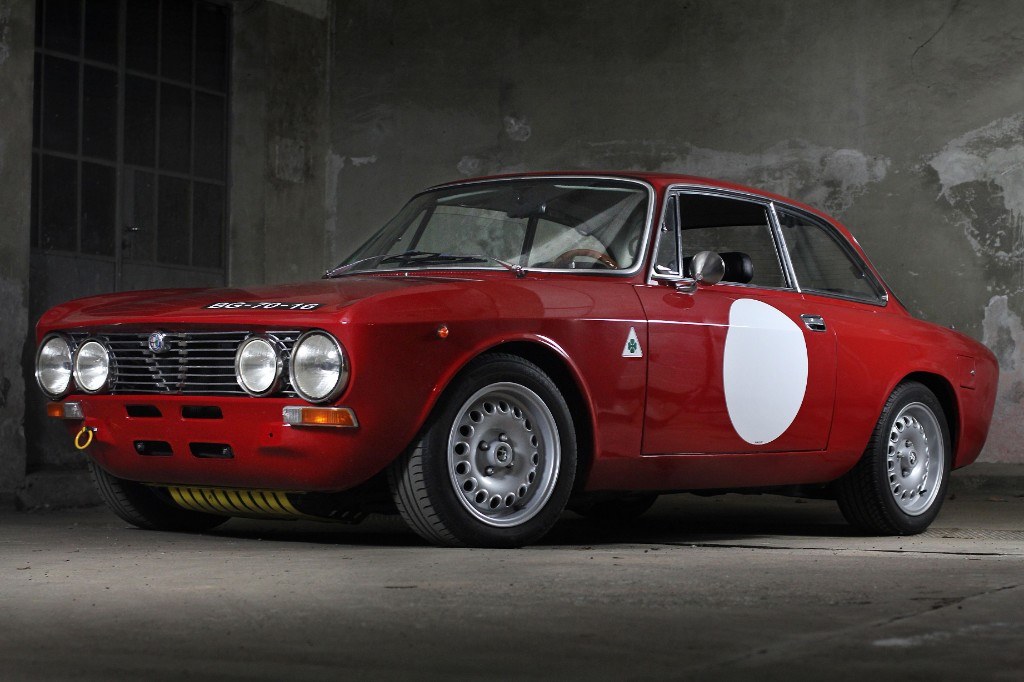
The Tipo 105 series is the heart of the classic Alfa Romeo world: the Giulia saloon (from 1962) and the Bertone coupé (from 1963) share engineering and character – an aluminium twin-cam engine, a five-speed gearbox and a driving pleasure that is hard to match in this price range. The buying decision is not made at the engine, though, but in the metal. Hardly any series rusts so thoroughly and so out of sight. Floorpan, sills, A-pillars and wheel arches rot from the inside out, and the sheet-metal quality of the 1970s is weaker again than that of the early cars. A shiny GTV can be structurally finished.
In short: the 2000 GTV is the most confident choice – the strongest engine, the best equipment, the most sought-after variant. If you want to spend less, you find the same driving pleasure in the GT 1300 or 1600 Junior, with a smaller engine and clearly lower prices. The Giulia saloon is the underestimated tip: the same engineering, more space, the cheapest way in. Substance matters more than the variant – better an honest Junior than a filler-loaded GTV with a rotten floor.
Variants and production years
- Giulia saloon (1962–1977): the four-door base of the series, from the 1300 to the 1600 Super (from 1965, twin carburettors, 98 hp). An angular, low-drag body, the same engineering as the coupés. The Super is the most sought-after saloon variant; the late Giulia Nuova (from 1974) is the cheapest.
- Giulia Sprint GT / GT Veloce 1600 (1963–1968): the first Bertone coupé, with the sharp edge on the front panel («Scalino», or step-front bonnet). Early, purist cars with their own collector following. Prices sometimes sit above 2000 GTV level.
- GT 1300 / 1600 Junior (1966–1976): the way into the Bertone coupé, with a 1.3- or (from 1972) 1.6-litre engine. The same body, the same feel, a smaller engine. Underestimated for decades, now firmly established.
- 1750 GTV (1967–1972): the smoother front without the edge, a 1.8-litre engine with 118 hp, a finer interior. For many the most harmonious step.
- 2000 GTV (1971–1976): the top model, with a 2.0-litre engine (150 hp), recognisable by the honeycomb grille and the grouped round instruments. The most sought-after volume variant of the series.
Alongside these there are the GTC (convertible), the GTA/GTA Junior (lightweight homologation models with an aluminium outer skin) and Zagato bodies. These are separate collector markets, well above the values shown here. In 1977 the Tipo 105 era ended; the coupés handed over to the Alfetta GT.
Bodywork: rust is half the car
The unitary body of the Tipo 105 is torsionally stiff and light, but its box sections were barely rust-proofed at the factory, and in the 1970s uneven sheet quality was added. Cosmetic work can be managed; structural rust cannot:
- Floorpan and chassis rails: the most expensive zone. Floor panels, rails and the mounts for the rear trailing arms rot under the carpet and the underseal. Freshly applied protection is a warning sign. A proper floor repair with the rails quickly runs to five figures.
- Sills: built in several layers and rotting from the inside out. Blisters visible on the outside mean the inner layers are already gone. Trim strips and thick stone-chip coating often hide repair panels.
- A-pillars and screen frames: blisters at the foot of the A-pillar and around the windscreen call for screen removal and a specialist workshop. It is structural, and expensive.
- Wheel arches and wings: folded lips front and rear, wing ends and the transitions to the sill are classic filler zones. Take a magnet or a paint-thickness gauge.
- Rear: check the boot floor, the spare-wheel well and the tank area. Leaking rear-screen seals flood the tail for years unnoticed.
- Sheet quality of the 70s: late 2000 GTVs and the Giulia Nuova rusted faster from the factory than the early cars. The year is not an argument. What counts is the documented quality of the last restoration.
Engineering: aluminium twin-cam, carburettors, second gear
- Engine (Bialbero): the aluminium twin-cam four (1.3 to 2.0 litres) is eager to rev, durable and sounds unmistakable, if it has been looked after. Moderate oil use is normal by design; blue smoke on a change of throttle points to valve-stem seals or piston rings. You need to hear the cold start yourself: chain rattle and low oil pressure at hot idle are expensive warning signs. A rebuild at a specialist costs 12'000–20'000 francs.
- Head gasket and cooling: the aluminium head warps if it overheats. Take oil traces in the coolant, sludge on the oil-filler cap and nervous temperature behaviour on the test drive seriously; radiator and water pump belong to routine care.
- Carburettors: twin carburettors from Weber or Dellorto (depending on year and market) run very well when they are tight and synchronised. An uneven idle and spitting on acceleration point to worn throttle spindles and unmetered air. A rebuild costs four figures. The original carburettor set-up sets the value.
- Gearbox: the five-speed gearbox is robust, but the synchro rings of second gear are the classic fault of the series. Once warm, change smartly from first to second. Crunching belongs in the price talk. Check for oil leaks at the gearbox and the differential.
- Suspension and brakes: double wishbones at the front, a neatly located live axle at the rear. The handling is precise even by today's standards. Worn bushes and tired dampers are cheap to sort; disc brakes all round (from the mid-1960s) are well supplied.
Equipment and originality
- Matching numbers: compare engine and chassis numbers with the papers. The Centro Documentazione Alfa Romeo issues, for many chassis numbers, a certificate with the delivery data. Many Juniors now carry 1750 or 2000 engines. That is appealing to drive, but it reduces the value if undocumented.
- Interior and fittings: original instruments, steering wheels, bumpers and trim pieces have become rare and expensive. Complete, original cars fetch the best prices. GTA replica conversions are a market of their own, but they are not originals.
- History: photo-documented metalwork weighs more on a Tipo 105 than any seller's promise. A folder of invoices from the last 20 years is the best buying argument.
Specific to Switzerland
The basics of veteran status, MFK and import are in Knowledge. For the Tipo 105:
- Veterans: every Tipo 105 passed the 30-year line long ago. It is a point especially with converted Juniors.
- Italian imports: a large part of the supply comes from Italy. Dry cars from the south can be excellent in substance, but always check customs clearance, homologation and the quality of Italian «Restauro» work. Pretty paint over old rust is common.
- Swiss deliveries: Swiss first deliveries with an unbroken history are rare and sought after. Switzerland was traditionally a strong Alfa market. Cars with a documented Swiss history and old MFK reports fetch a premium.
What to look for at the viewing
The checklist for the Tipo 105 combines the shared inspection catalogue with the model-specific points of this series. For the Giulia and the Bertone GT:
- No buying decision without a lift or a pit. Floorpan, sills and A-pillars are half the car.
- Take a magnet or a paint-thickness gauge: hardly any series was so often loaded with filler and tarted up «Italian style».
- Cold-start the engine: chain rattle, blue smoke and low oil pressure at hot idle are expensive warning signs.
- Once warm, test second gear smartly. Crunching synchro rings belong in the price talk.
- Compare engine number, chassis number and carburettor set-up with the papers and the certificate. Clarify engine swaps on Juniors.
- Ask for photo documentation of the last restoration and match the invoices to the car's condition.
A Tipo 105 that passes these points is among the most emotional things the classic world offers under 100'000 francs: an everyday sports car whose engineering is still fully supported by clubs and specialists.