The essentials in brief
With 27 years of production (1966–1993), the Alfa Romeo Spider is one of the longest-lived roadsters of all. From the Pininfarina-drawn Duetto with its round tail to the Series 4, the Tipo 105/115 base stayed the same at its core: monocoque body, twin-cam four, five-speed gearbox and disc brakes all round. That was unusually modern in 1966, and it still makes the Spider one of the most alive classics to drive in its price range. The buying decision is not made at the engine, though, but in the metal: the Spider rusts in the sills, the floor panels and the soft-top well, from the inside out. A shiny paint finish says nothing about the substance.
In short: Series 2 (Fastback/Coda Tronca) is the best compromise of classic line, everyday use and price. Collectors go for the Duetto, whose round-tail body is the most expensive and most sought-after variant. Series 4, with injection, power steering and the best corrosion protection, is the most straightforward way in. Substance matters more than the series: better an honest Series 3 than a tarted-up Duetto with rotten sills.
Variants and production years
- Duetto/round-tail 1600 (1966–1969): the original, with the rounded boat tail («Osso di Seppia»), a 1.6-litre twin-cam of 109 hp. From 1967 as the 1750 Veloce with 118 hp. Famous on film through «The Graduate». The collector variant, with the highest prices.
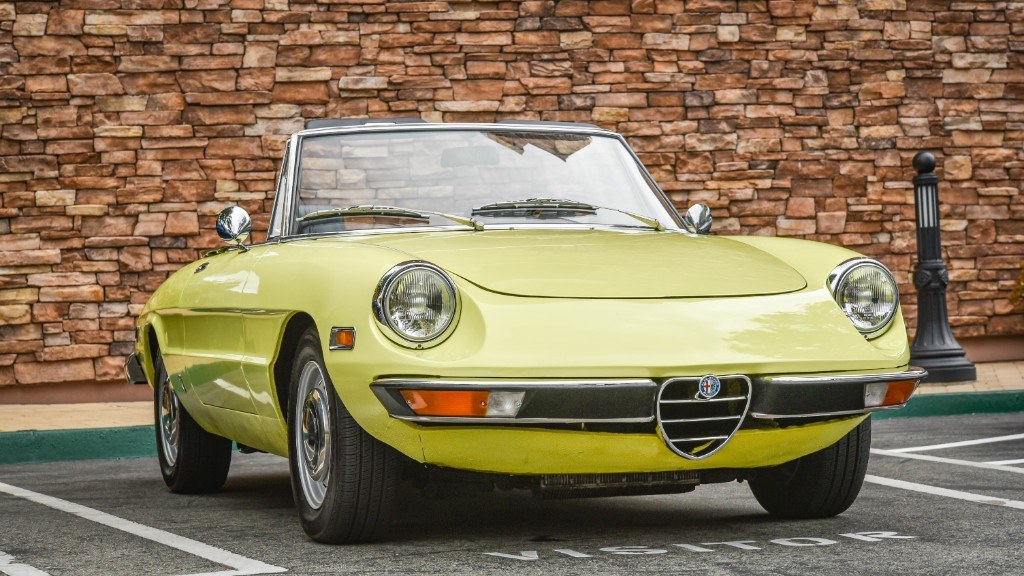
- Series 2 Fastback/Coda Tronca (1970–1982): the cut-off Kamm tail changed the line; the engineering stayed. 1300, 1600 and 2000, up to 132 hp. The long production run makes it the backbone of the market. Early chrome cars are more sought after than late ones with rubber add-ons.
- Series 3 Aerodinamica (1983–1989): plastic front and rear spoilers, rubber bumpers. Visually the most argued-over series, and therefore the cheapest way in. Technically just as solid; many cars as Quadrifoglio Verde, with the full equipment.
- Series 4 (1990–1993): a smoothed tail, Motronic injection, power steering, automatic on request. The most modern Spider, with the best rust protection from the factory. Slightly above Series 3 in price, and the most carefree choice for everyday use.
All series share the floorpan and the twin-cam engine. A manual gearbox is standard; the rare Series 4 automatic is no premium on the market. US versions (from 1969 with Spica injection, later Bosch) shape the re-import supply.
Body: sills, floor panels, soft-top well
The Spider's unitary body is stiff, but its box sections hold moisture. Cosmetic work can be managed; structural rust cannot:
- Sills: the most critical zone. The Spider has double-skinned sills that rust from the inside out. Blisters visible on the outside mean an advanced attack. Fresh underseal and thick coatings are warning signs, not proof of care.
- Floor panels and chassis rails: check under the carpets and from below. Repair panels are available and common; the quality of the welding is what counts. Wavy seams and overlapping patches drag down value and safety.
- Jacking points: they rust out of sight and tear out when you lift the car. Test carefully, and look around for earlier welding.
- Wheel arches and wing edges: the folded lips front and rear rot under filler and trim strips. Take a magnet or a paint-thickness gauge. Hardly any series was tarted up cheaply so often.
- Soft-top well: the classic hidden rust point. Blocked drains hold water behind the seats, and from there the rust moves into the floor panels and the rear chassis rails. Open the soft top and light up the well. No buying decision without that look.
- Boot floor and rear tips: water gets in through tired seals. Check the spare-wheel well and the panels behind the bumpers.
Engineering: twin-cam, Spica, gearbox
- Twin-cam four: the aluminium engine (1300–2000 cm³) is eager to rev and, if looked after, very durable. Oil use up to about 1 litre per 1'000 km is normal by design. More than that, blue smoke when you lift off, or chain rattle after warm-up, announce a rebuild: at a specialist, 8'000–15'000 francs. A service history with oil-change receipts weighs more than the mileage.
- Timing chain: the duplex chain lasts a long time, but it stretches. Take seriously a rattle on a cold start that remains after warm-up.
- Spica injection (US versions 1969–1981): the mechanical injection runs very well when it is set correctly, but only a few specialists master it. Many re-imports were converted to Weber or Dellorto carburettors: not a fault in itself, but the paperwork has to be right. A botched or disabled Spica system is a price argument.
- Carburettors (European versions): twin carburettors from Weber, Solex or Dellorto. Robust, but they need setting. An unsteady idle and spitting on the transition mean synchronisation or wear.
- Gearbox: the five-speed gearbox lasts; the synchro rings of second gear are the known weak point of the series. If second crunches on a quick change, hot or cold, a rebuild is ahead. Clutch and driveshaft gaiters are wear items.
- Suspension and brakes: double wishbones at the front, a live axle at the rear. Simple, and well supplied. Worn bushes show up as a vague feel; disc brakes all round are unproblematic.
Equipment and originality
- Soft top: the cloth soft top lasts 10 to 15 years. Tears, chafe marks on the frame and a cloudy rear screen are normal, but they are a price factor. Replacement, fitted, costs 2'500–4'000 francs. Check that the frame moves freely.
- Interior: the vinyl seats last; dashboards crack in the sun. Complete, original interiors, especially on the Duetto and early Series 2 cars, set the value. Reproductions exist for almost everything.
- Backdates and mixed parts: many Series 3 cars were taken back visually to Series 2, some Series 2 cars dressed as Duettos. Compare chassis number, engine number and paint code with the papers. Originality and a documented history fetch the best prices.
Specific to Switzerland
The basics of veteran status, MFK and import are in Knowledge. For the Spider:
- Veterans: every Spider up to model year 1996 has reached the 30-year line. The whole series, including Series 4, qualifies.
- MFK: the inspectors look at the sills, the floor panels and the jacking points, exactly the zones that get welded or loaded with filler on a cover-up. A fresh report does not replace your own check on the lift.
- US re-imports: a large part of the supply, recognisable by federal bumpers, Sealed-Beam headlamps, side marker lights and a mile speedometer. Cars from dry states are often sound in substance, but they need a budget for the conversion to European spec and a clear answer on the Spica question. Clean customs and conversion paperwork is essential.
- Swiss deliveries: Swiss first deliveries with an unbroken history are rare and sought after. European carburettor cars with a Swiss history are among the best-paid Spiders of their series.
What to look for at the viewing
The checklist for the Spider combines the shared inspection catalogue with the model-specific points of this series. For the Tipo 105/115:
- No buying decision without a lift or a pit. Sills, floor panels and jacking points are half the car.
- Open the soft top and light up the soft-top well: the classic hidden rust point decides expensive damage later.
- Cold-start the engine: chain rattle and blue smoke when you lift off are expensive warning signs. Ask about oil use.
- Change into second smartly, hot and cold. Crunching synchro rings mean a gearbox rebuild.
- On US re-imports, clarify the Spica question (original, rebuilt, or converted to carburettors?) and look at the customs and conversion documents.
- Take a magnet or a paint-thickness gauge against filler cosmetics, and compare chassis number, engine number and paint code with the papers.
A Spider that passes these points is one of the most alive and most everyday-usable classics in its price range: a roadster whose twin-cam sound and direct steering have lost none of their appeal after more than 50 years.