In brief
The E-Type had its world premiere in 1961 at the Geneva Motor Show – few classics have a closer link to Switzerland. By 1974 a good 72'000 examples had been built in three series: Series 1 with 3.8- and 4.2-litre six-cylinders, the carefully modernised Series 2, and Series 3 with the 5.3-litre V12. Technically the E-Type is a monocoque with a bolted square-tube frame for the engine and front axle – and that is exactly where the buying decision is made: sills, floor panels and engine frames carry the car. Gloss paint over tired structure is more common on the E-Type than the reverse, because many cars were restored quickly and superficially in the boom years.
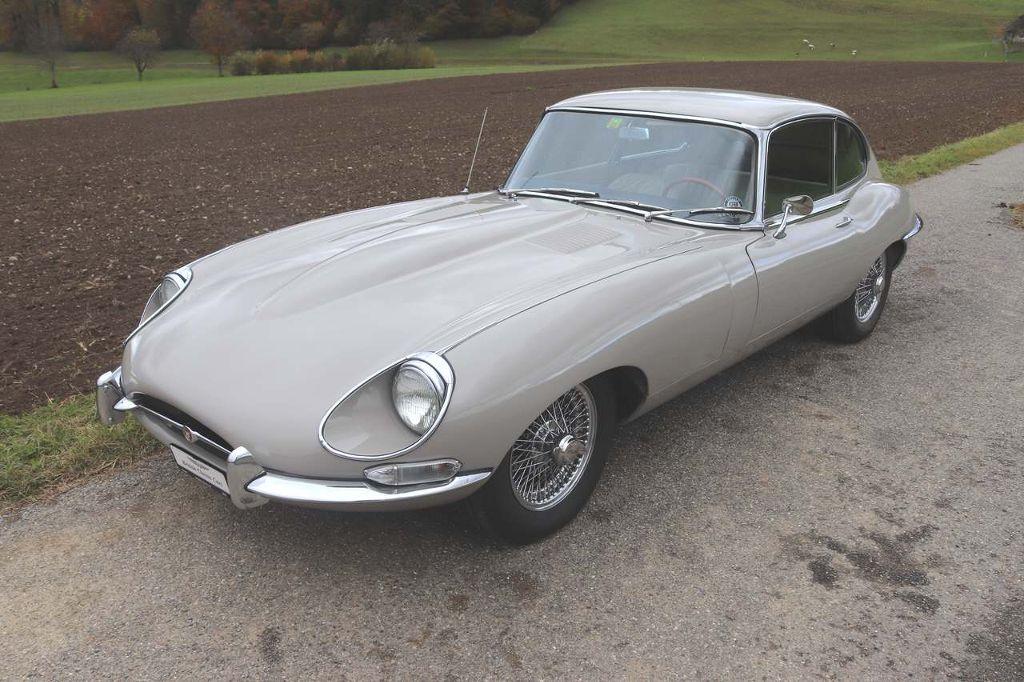
The short recommendation: the Series 1 4.2 roadster is the ideal of looks, driveability and value stability – a fully synchronised gearbox, better seats and brakes than the 3.8, but still the pure shape with covered headlamps. If you want to drive rather than collect, Series 2 is the underestimated price-and-performance package: the same looks from two metres away, better cooling and brakes, a much lower way in. The Series 3 V12 is the effortless cruiser among E-Types; the Series 3 Coupé and the 2+2 variants are the cheapest route into an E-Type at all. The series matters less than the structure: better a fundamentally sound Series 2 than a cobbled-together Series 1.
Variants and production years
- Series 1 3.8 (1961–1964): the original E-Type, with the 3.8-litre XK engine (265 hp SAE), covered headlamps and slim bumpers. The earliest cars (1961/62), with a flat boot floor (“Flat Floor”) and outside bonnet locks, are the most sought-after six-cylinders – they sit clearly above the table range. The Moss gearbox, with no synchromesh on first, takes some getting used to.
- Series 1 4.2 (1964–1968): the same body, but a 4.2-litre engine with more torque, a fully synchronised gearbox, better seats, an alternator instead of a dynamo and more effective brakes. As a roadster (OTS), a Coupé (FHC) and, from 1966, as a 2+2 with a longer wheelbase.
- Series 1½ (1967–1968): transition years, with open headlamps but otherwise largely Series 1 mechanicals; US cars with two Stromberg carburettors and less power. A chapter of its own in the text, and on the market priced between Series 1 and 2.
- Series 2 (1968–1971): open headlamps, a larger cooling opening, stronger brakes, wraparound bumpers, larger lamps – US safety and emissions rules shaped the update. European cars kept the three SU carburettors, US versions got two Strombergs. Roadsters sit noticeably above the Coupés in price; the table range covers both, and good roadsters sit at the upper edge.
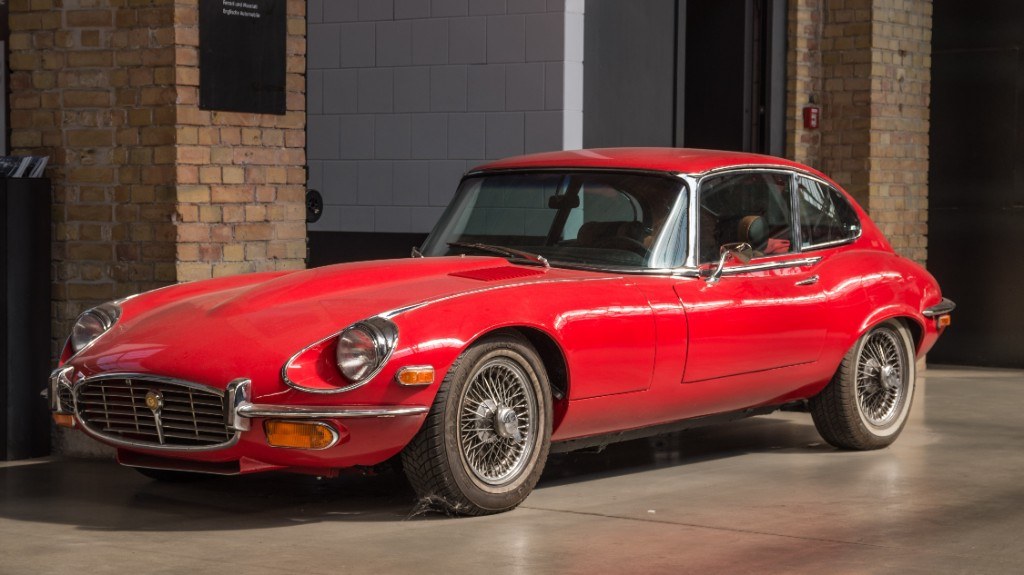
- Series 3 (1971–1974): the 5.3-litre V12 (272 hp DIN) on the long 2+2 wheelbase, as a roadster and a 2+2 Coupé, recognisable by the chrome grille and the flared arches. Power steering and ventilated front discs made it a grand tourer. The 2+2 Coupé is the cheapest way into the series – good cars sometimes well below roadster level.
Be wary of anything that calls itself “Lightweight”, “Semi-Lightweight” or “Low Drag”: the original factory Lightweights are million-franc objects with a fully documented history. What turns up on the market is almost always a replica or a conversion – legitimate as such, but never at the original price. If you are in doubt about a chassis number, the Jaguar Daimler Heritage Trust can help.
Body: the monocoque carries the car
The E-Type is a self-supporting shell (“tub”) with a bolted square-tube lattice frame that carries the engine and the front axle. Here rust is not cosmetics, it is structure:
- Sills and rear tips: the sill boxes are load-bearing. Rust works from the inside; fresh underseal and thick paint on the sills are classic sales makeup. No judgement without a lift.
- Floor panels and footwells: leaking screen frames and soft tops flood the footwells. Overlapping patch panels, instead of properly let-in repair panels, crush the value.
- Engine frames: the square-tube frames rust at the bolt points and distort in accidents. Uneven bonnet gaps and crooked tracking are clues. New frames are available, but fitting them is specialist work.
- Front bonnet: the huge one-piece panel, hinged at the front, made up of bonnet, wings and nose, rusts at the lower corners and around the headlamp bowls. Check the fit – a good used or new bonnet runs to five figures, and bad gaps give cheap restorations away at once.
- Rear and IRS area: boot floor, trailing-arm mounts and the area around the rear subframe. Rust at the radius-arm mounts is structural.
- Doors, hardtop, chrome: door bottoms rot, chrome parts are expensive. On the roadster, check the soft top and the windscreen frame for water traces.
Mechanicals: XK six-cylinder, V12, Moss gearbox, IRS
- XK engine (3.8/4.2): the twin-cam six is robust and well supplied. The warning signs are low oil pressure (warm, on the move, clearly over 40 psi), blue smoke on the overrun and rotten water passages – the cooling on the early cars is marginal, and overheating in traffic is the classic Series 1 weakness. The 4.2 has more torque, but if servicing was neglected it tends toward cylinder-head corrosion.
- V12 (Series 3): mechanically long-lived, but uncompromisingly dependent on a sound cooling system – silted radiators and tired fans warp the aluminium heads, and then it gets very expensive. Four Zenith-Stromberg carburettors and the early transistor ignition (Opus) need a tuner who knows the engine. A healthy V12 runs silkily and starts warm without hunting.
- Gearbox: the Moss gearbox on the 3.8 has no synchronised first gear and shifts slowly – that is character, not a fault; grinding in the synchronised gears is. From the 4.2 the fully synchronised Jaguar gearbox is unobtrusive. The Borg-Warner automatic (2+2, Series 3) must shift cleanly and without bangs when warm.
- Rear axle (IRS): the independent suspension, with inboard brake discs, sits in its own cage. Worn bushes, oil mist from the differential and neglected inboard brakes are common – any serious work means removing the whole cage, so the work is readily postponed.
- Brakes and suspension: discs all round, more resistant from Series 2, ventilated at the front with power steering from Series 3. On wire wheels, check for loose spokes and worn knock-off hubs.
Equipment and originality
- Heritage Certificate: the certificate from the Jaguar Daimler Heritage Trust documents the chassis, engine, gearbox and body numbers, the first delivery and the original colour. On the E-Type it is in practice mandatory – without the certificate any matching-numbers claim stays unchecked.
- Matching numbers and colour codes: an original engine and a documented original colour drive the value; a documented colour change is not a drama, an unclear identity is. Restamped numbers and cars “assembled” from donor cars do occur.
- Roadster conversions: over the years many roadsters were “made” from Coupés and 2+2s – sometimes good craft, but never an original car. Check the body number and the welds, and if in doubt ask the Heritage Trust.
- Interior and details: leather, instruments and switches are well reproduced – original, patinated interiors are worth more than a freshly retrimmed one. The tool roll, jack and handbook round off a collector car.
Switzerland-specific
The basics on veteran status, MFK and import are in Knowledge. For the E-Type:
- Veterans: every E-Type passed the 30-year mark long ago. Wild conversions (modern five-speed gearboxes, altered carburettor set-ups) can cost the status if they are not recorded.
- US reimports: a large part of what is on offer. Left-hand-drive cars from dry states are often structurally the better cars than “quickly done” Europeans, but they bring a mile odometer, US emissions equipment (Stromberg set-up on Series 1½/2) and sometimes long periods of storage. Proof of customs clearance and the conversion documentation belong in the file.
- RHD or LHD: right-hand-drive cars are cheaper to buy in Switzerland and harder to sell – if you want to keep the car, you can save that way; if you want value stability, stay with left-hand drive.
- Swiss deliveries: Swiss first deliveries with a documented history are rare and sought after – the aura of the Geneva premiere adds to it. A documented Swiss car with a Heritage Certificate plays in a price league of its own.
What to watch for at the viewing
The checklist for the E-Type combines the shared inspection catalogue with the points specific to this series. For the E-Type in particular:
- Do not decide to buy without a lift or a pit – sills, floor panels, engine frames and the IRS cage decide the value, not the paint.
- Bonnet fit as a quick test: uneven gaps reveal an accident, distorted frames or cheap metalwork.
- Start the engine cold and let it warm up at idle: oil pressure, cooling behaviour and (on the V12) a clean hot start are the most expensive items.
- Ask for the Heritage Certificate and compare every number on the car yourself – including the body number, especially on roadsters.
- At Series 1 prices, verify the details: Flat Floor, outside bonnet locks and early numbers justify a premium only when they are documented.
- Read the restoration file rather than leaf through it: photos of the metalwork with the structure open are worth more than any glossy folder.
An E-Type that passes these points is one of the great classics – and one of the few whose myth, even after 65 years, still delivers every kilometre.