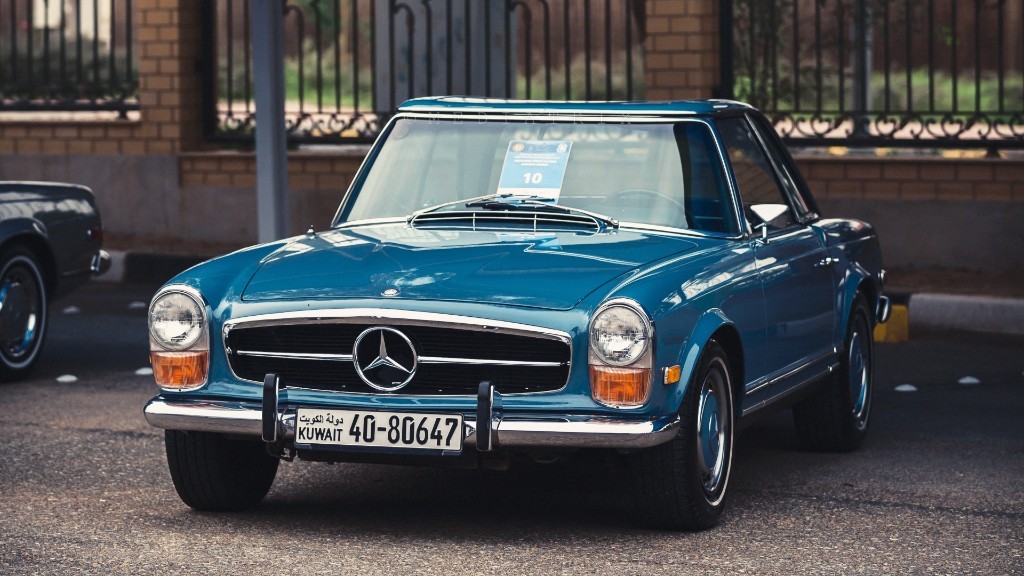
In brief
The “Pagoda” – named after the hardtop that curves inward – is one of the most value-stable classics there is, and technically unusually modern for its time: a safety body with crumple zones, disc brakes and an injected engine. For a purchase, that does not mean you can relax: the structure decides. A rusty Pagoda with a tired injection pump quickly costs more to restore than the best example on the market is worth.
The short recommendation: the 280 SL (1968–1971) is the most sought-after and the most everyday-usable variant – more torque, the best parts supply, the highest value stability. If you want the understatement, the 230 SL is the lightest-footed and the cheapest way in. The engine variant matters less than the condition of the floorpan and the mechanicals: better the best 230 SL than a mediocre 280 SL.
Variants and production years
- 230 SL (1963–1967): 2.3-litre six-cylinder (M127) with 150 hp. The lightest and sportiest car in the series, about 19'800 examples.
- 250 SL (1966–1968): a transition model, with only about one year of production (about 5'200 examples). 2.5 litres (M129) with 150 hp, but clearly more torque, and disc brakes at the rear for the first time. The rarest variant – on the market, though, barely more expensive than the 230 SL.
- 280 SL (1968–1971): 2.8 litres (M130) with 170 hp, about 23'900 examples. The most-built, most comfortable and most sought-after Pagoda.
- “California Coupé”: a factory variant without a fabric soft top – hardtop only, and in return an emergency rear bench. Cheaper to buy, but more limited in use; fitting a soft top later is involved work.
Gearboxes: four-speed manual, the widespread four-speed automatic (standard especially on US cars) and the rare ZF five-speed gearbox, which fetches a clear collector premium – you must check originality with records. About half of production went to the USA; US reimports still shape what is on offer.
Body: the floorpan decides
The Pagoda is solidly built, but it is a child of its time – cavity protection was rudimentary. Cosmetic rust can be managed; structural damage cannot:
- Chassis rails and main-frame extensions: the critical zone. Repairs are possible, but expensive, and trustworthy only with photos and invoices. Fresh underseal on a car for sale is a warning sign, not proof of care.
- Floor panels, sills, jacking points: check from below and from the cabin (lift the carpets). A musty smell gives away a damp floorpan.
- Front wings and headlamp bowls: classic Pagoda rust spots, as is the battery panel in the engine bay – leaking acid speeds corrosion there.
- Boot floor and spare-wheel well: leaking rear-window and lamp seals flood the boot over the years.
- Filler check: bring a magnet or a paint-thickness gauge. Many Pagodas were cheaply “restored” in the 1980s – thickly filled wheel arches are common.
Mechanicals: injection pump, cooling, front axle
- Mechanical Bosch injection: the heart of all three engines. A correctly set pump runs beautifully; a maladjusted or worn pump causes starting problems, an uneven idle and five-figure overhaul costs. Experience the cold start yourself, watch the warm-up, and look for specialist invoices in the records.
- Cooling system and aluminium cylinder head: neglected coolant corrodes the aluminium head from the inside. Ask about the coolant-change history, watch for oil-and-water mixing, and check the heat exchanger and water pump.
- Kingpin front axle: robust, but hungry for grease – the kingpins want greasing every few thousand kilometres. Worn kingpins show up as play on a raised wheel; the overhaul is specialist work.
- Gearboxes: the Daimler four-speed automatic shifts noticeably and a little roughly by design – that is normal. Slip, clunks or delayed shifts are not. Manuals are durable; the ZF five-speed gearbox is rare and expensive to maintain, but it makes the Pagoda clearly more usable for travel.
Equipment and originality
- Hardtop: it belongs to the Pagoda the way the star does. A missing or ill-fitting (later-bought) hardtop presses the value; check the fit on the car.
- Matching numbers and data card: compare the engine and chassis numbers with the Mercedes data card, and verify the colour and equipment codes. An original colour combination and a documented history fetch the top prices.
- Chrome and interior: bumpers, trim strips and the windscreen frame are elaborately shaped on the Pagoda – refurbishment costs more than average. In the interior, distinguish original MB-Tex, leather and a cheap new build.
Switzerland-specific
The basics on veteran status, MFK and import are in Knowledge. For the Pagoda:
- Veterans: every Pagoda is well past the 30-year mark.
- US reimports: a large part of what is on offer. Dry-state cars can be structurally excellent, but they bring Sealed-Beam headlamps, a mile odometer, lower compression and almost always an automatic. European first deliveries with a manual fetch a noticeable premium.
- Swiss deliveries: Swiss first deliveries with an unbroken history are rare and structurally more in demand than on offer – priced accordingly.
What to watch for at the viewing
The checklist for the Pagoda combines the shared inspection catalogue with the points specific to this series. For the W113 in particular:
- Do not decide to buy without a lift or a pit – the floorpan is half the car.
- Start the engine cold and watch the warm-up of the injection.
- Bring a magnet or a thickness gauge against filler restorations.
- Have the hardtop fitted and check the fit.
- Compare the data card, service book and (on imports) the customs papers with the condition of the car.
- On automatic cars, test the shift behaviour at operating temperature – noticeable yes, rough with bangs no.
A Pagoda that passes these points is among the most solid classic investments there are – and it is one of the most elegant cars ever built.