In brief
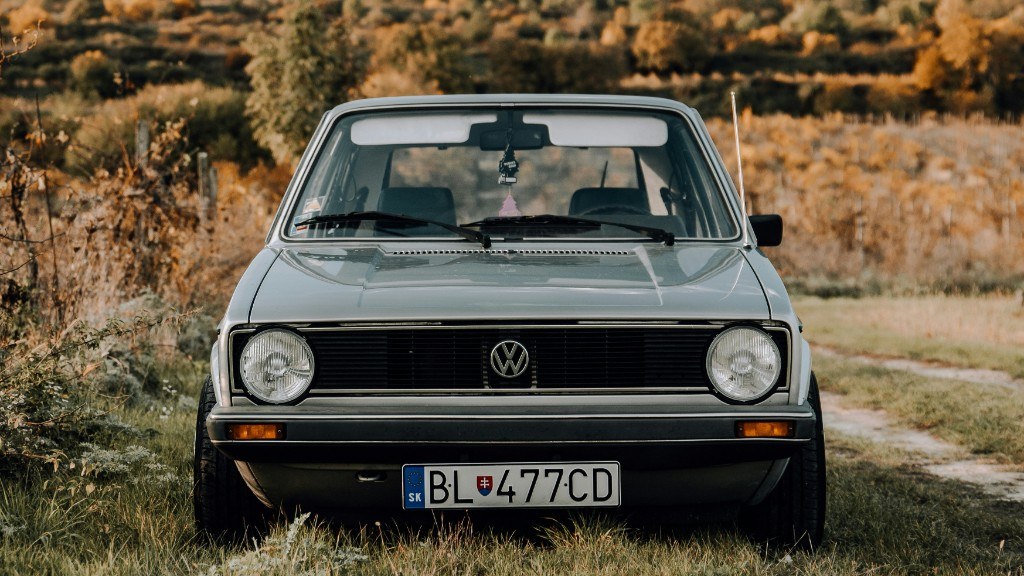
From 1974 the Golf I replaced the Beetle and became the most important German car of its time: a clear Giugiaro line, front-wheel drive, a transverse engine, just under 1.4 million examples of the European saloon alone. That very everydayness is its problem today: most Golf Is were used up, thrashed or hacked about in the tuning scene of the 1990s and 2000s. Unmolested, rust-free examples are rare, and the market prices them accordingly. The buying decision is not made on the robust mechanicals, but on two questions: how honest is the metal, and how original is the car?
The short recommendation: the GTI is the icon and the most value-stable choice, but only as a genuine car with matching numbers and a traceable history. If you want to drive open, the Cabriolet is the most relaxed supply on the market, because it was built until 1993 and has survived in large numbers. Base saloons and Diesels are the cheap, honest way into the classic-car world, provided you find substance that has not been welded up. As with the BMW E30: the best base model is the better buy than a tired, tarted-up GTI with a scene past.
Variants and production years
- Golf I base / L / GL (1974–1983): the volume models, with 1.1- to 1.6-litre carburettor engines (50–75 hp), as two- and four-door cars. Long smiled at, now sought as original time capsules. Early cars with the “Schwalbenschwanz” rear panel (swallowtail, up to 1978) are rare.
- Golf I GTI (1976–1983): the original GTI and the founder of the hot-hatch class. First a 1.6-litre EA827 with K-Jetronic and 110 hp, from 1982 a 1.8-litre with 112 hp. The GTI Pirelli special (1983) carries a clear collector premium. The GTI 16V belongs to the Golf II and is a chapter of its own.
- Golf I Cabriolet (1979–1993): type 155, built by Karmann in Osnabrück, with a fixed roll bar (“Erdbeerkörbchen”, the strawberry basket). We cover all Mk1 cabriolets here, because the Cabriolet kept the Golf I body beyond the end of the saloon in 1983. It ran alongside the Golf II and III until 1993, latterly with sought-after specials (GLi, Sportline, Classic Line, Etienne Aigner).
- Golf I Diesel / Formel E (1976–1983): the first Golf Diesel (1.5, 50 hp, later 1.6 with 54 hp) made the diesel acceptable in a compact car. The Formel E (from 1981) saved fuel with a long-ratio 4+E gearbox and a shift indicator. Both are the cheapest way into the series: slow, but almost indestructible.
The Caddy pick-up and the notchback Jetta were also built on the Golf I. Both are chapters of their own and are not covered in depth here.
Body: rust decides the purchase
The Golf I has no meaningful factory cavity protection, and early years rust almost everywhere. The mechanicals are cheap to put right, the metal is not:
- Rear wheel arches: the classic Golf spot. The folded edges rot from inside; wide plastic arch trims or fresh paint on the edges are often cosmetics over holes. Check from inside the wheel housing.
- Sills and jacking points: they rust hidden, from the inside out; visible bubbles mean advanced damage. Without a look from underneath there is no serious judgement.
- Spare-wheel well: water stands here for years, unnoticed, under the carpet. Expose the well. Fresh, thick underseal is suspicious.
- Tailgate: along the lower edge and around the rear-screen seal. Used tailgates can be found, but good ones are getting scarce.
- Windscreen frame and A-pillars: rust at the screen seal means the screen has to come out, or it comes back. Also check the scuttle and where the A-pillar meets the inner wing.
- Structure: rear-axle mounts, chassis rails and floor pans matter to the MFK. Do not forget the filler-neck area and the rear tips. The bolted front wings are not critical. The vertical panels behind them are.
On the Cabriolet, soft-top well drains and floor pans are added: blocked drains flood the cabin. Late cabriolets (from the end of the 1980s) are better protected from the factory and often the healthier substance.
Mechanicals: EA827, timing belt, carburettor and K-Jetronic
- Engines: the small 1.1/1.3 units and above all the EA827 family (1.5/1.6/1.8) are regarded as almost indestructible. Mileages over 300'000 km are documented. The decisive point is the timing belt: without a documented change it should be renewed at once. The change is cheap, a snap is not.
- Carburettor (base, L, GL): Solex and Pierburg carburettors run well when they are tight and set up. A hunting idle, a poor cold start and stalling point to worn throttle shafts or an air leak. Replacement and an overhaul are no drama, but they are negotiating room.
- K-Jetronic (GTI): the mechanical injection is reliable as long as nobody has tinkered with it. Starting trouble cold or hot, uneven running and jerking mean the fuel distributor, the warm-up regulator or leaking intake paths. A rebuild at a specialist costs four figures. On inspection, do the cold start yourself.
- Diesel: the pre-chamber diesel clatters, smokes when cold and lasts for ever. The timing belt counts double here; also check the injection timing and diesel bug in the tank on cars that have been standing.
- Gearbox and suspension: a crunchy second and worn linkage bushes are typical of the Golf, and manageable. Suspension parts, brakes and wear items are excellently supplied and cheap. Parts availability is one of the strengths of the series.
Originality versus hacked about
Few series have a more intense tuning past than the Golf I. Lowering, wide tyres, a sport steering wheel, extra gauges, engine swaps, GTI looks on base cars: much of it was fitted in the 1990s and never documented. That is a double risk today. First, the market pays for originality, and putting a car back costs more than the parts were ever worth (holes in the dashboard stay). Second, conversions give away hard use by previous owners. Check the authenticity of the variant against the chassis number, the type plate and the data card: “GTI” replicas based on plain models are common and are gladly offered as genuine cars. An honest, unmolested GL with history is a better basis than a GTI thrown together from parts. As with the BMW E30: a car’s scene past is a price factor, not a cosmetic flaw.
Specific to Switzerland
The basics on veteran status, the MFK and import are in the knowledge section. For the Golf I:
- MFK: the inspectors know the weak spots. Rear-axle mounts, sills, floor pans and brake lines are standard glances. A fresh report is worth more on the Golf I than on more robust classics, but it does not replace your own inspection on the lift.
- Veterans: every Golf I saloon (up to 1983) has long met the age threshold; the late Cabriolets (up to 1993) have only reached it in recent years, and not every late cabriolet also gets the registration, because of conversions or condition.
- Market: the Swiss supply of saloons is thin, and genuine CH deliveries with history are sought after. Cabriolets are clearly more common and often in cared-for second-car condition. Patience pays here for a car with an unbroken story. GTIs are often imported from Germany; have the customs clearance and the history documented properly.
What to look for on inspection
The checklist for the Golf I combines the common inspection catalogue with the points specific to this series. For the Golf I in particular:
- Do not decide to buy without a look from underneath: wheel arches, sills, the spare-wheel well and the rear-axle mounts decide the purchase.
- Take a magnet or a paint-thickness gauge: many Golf Is were cheaply tarted up over rust.
- Start the engine cold: the carburettor warm-up and the K-Jetronic cold start are the most honest condition reports.
- Ask to see the timing-belt record, or price the change in.
- Check the authenticity of the variant against the numbers and the data card, especially on the GTI, and raise the tuning past openly.
- On the Cabriolet, open and close the soft top fully, and check the drains and floor pans for traces of water.
A Golf I that passes these points is one of the simplest and cheapest classics to run: handy, economical, with excellent parts supply and an everyday usability that still surprises after 50 years.