The essentials in brief
The 2CV is probably the most likeable way into the classic world: simple, light, with a parts supply that delivers practically every part new. The 2CV6, with the 602 cm³ flat-twin (from 1970), is the most everyday-usable and most widely offered step. The buying decision is not made at the engine, which is almost indestructible, but at the chassis: the original platform chassis rusts through from the inside, and a large share of the surviving cars now runs on a replica chassis or a galvanised Galva chassis. What counts is the quality and the documentation of that swap, and whether the metalwork on the floor panels and sills was done properly or only as cosmetics. Hardly any series was «tarted up» cheaply as often as the 2CV.
In short: a 2CV6 Club or Spécial from the 1980s, with a documented Galva chassis or a provably sound original chassis, is the most sensible way in. Front disc brakes (from 1981), the best parts supply, honest engineering. The Charleston is the most sought-after series variant, and priced accordingly. Substance matters more than the trim line: better an honest Spécial than a shiny Charleston with a rotten chassis.
Variants and production years
- 2CV4 (1970–1978): the sister model introduced alongside, with a 435 cm³ engine (24 hp). Clearly rarer and weaker. Hard work in everyday use, a niche subject for collectors. The checkpoints are the same.
- 2CV6 (from 1970): the 602 cm³ flat-twin, at first 28 hp (later 29 hp), made the 2CV usable on the motorway for the first time. The base of every line that followed.
- 2CV6 Spécial (1975–1990): the austere version, round headlamps and reduced equipment. Valued today as the most purist variant.
- 2CV6 Club (1975–1990): the comfort line, rectangular headlamps and better equipment. The backbone of the supply.
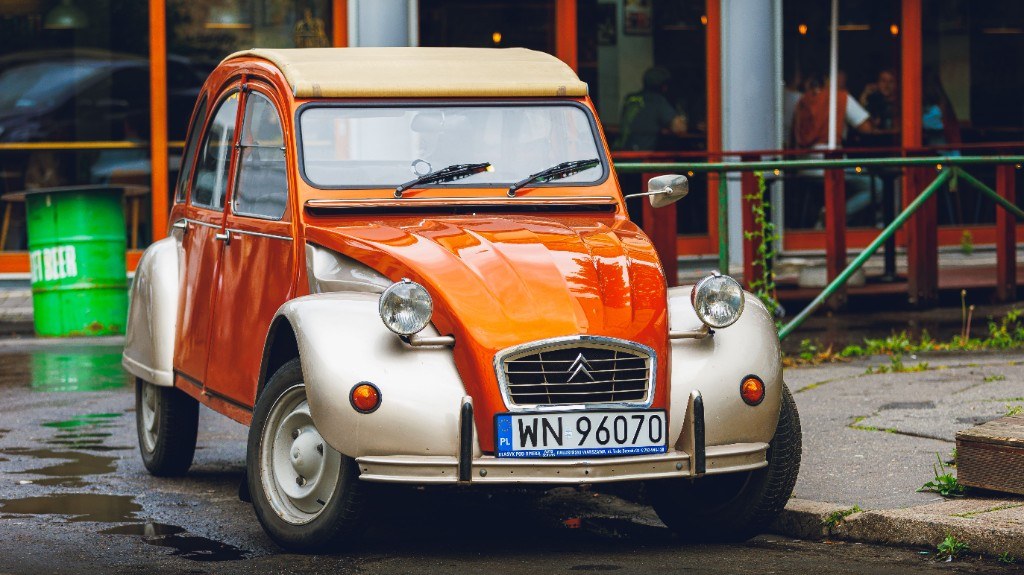
- 2CV6 Charleston (1980–1990): two-tone paint (Delage red/black, later also yellow/black and grey/grey), round headlamps, special upholstery. Launched as a special edition, a fixed part of the range from 1981. The most sought-after series variant.
- Special editions (Spot 1976, France 3 1983, Dolly 1985/86, Cocorico 1986 and others): small runs with special paint. Original, documented examples fetch a premium. Repainted imitators are common.
French production ended in February 1988 at Levallois; until July 1990 the 2CV6 continued in Portugal, at Mangualde. Late Portuguese cars are regarded as a little less well built. You do not have to mark them down across the board: the condition of the individual car is what counts.
Body and chassis: this is where the decision is made
The 2CV carries a light, bolted body on a platform chassis. Easy to repair, but full of scope for botched work:
- The chassis is the car: the original platform chassis collects moisture in its box sections and rusts from the inside out. Longitudinal rails, crossmembers and the mounts of the suspension cans are the critical zones. Fresh, thick underseal is a warning sign, not a buying argument.
- Replica and Galva chassis: a large share of the surviving 2CVs runs on a replacement chassis. Branded galvanised chassis are often technically better than the original, but only with a clean fit. Cheap replicas with a poor fit distort the body. Invoice, origin and the MFK entry for the swap belong in the buying check.
- Floor panels and pedal floor: under rubber mats and carpets, this is where it rots first. Repair panels cost little; the quality of the welding varies dramatically. Check from above and from below.
- Sills, A-pillars, screen frame: on the 2CV, water runs almost everywhere by design. Blisters on the windscreen frame mean a large-area job.
- Bolt-on panels as cosmetics: wings, bonnets and doors are bolted and available new. A freshly panelled car can be rotten underneath. Do not forget the rear closing panel and the boot floor.
- Roll-top roof: soft-top cloth and rear-window film are wear items, and cheap. Rust in the roof frame and the rain gutters is the more expensive job.
Engineering: 602 flat-twin, suspension cans, inboard brakes
- Engine: the air-cooled 602 cm³ flat-twin is almost indestructible with regular care, and serviceable yourself with the basics. Light oil weeping at the pushrod tubes and rocker covers is normal, drips are not. A rebuild is comparatively cheap. The engine is rarely the reason to leave a car standing.
- Ignition: the points ignition sits behind the fan and is gladly neglected. An uneven idle and tired pull are the typical results. Electronic ignitions are a common improvement, and not a concern.
- Suspension: the famous interconnected suspension, with horizontal spring cans on the chassis sides, gives the unique comfort. The cans and their mounts rust. Worn kingpins are the most common MFK fault. Regular greasing is essential, and it should be documented.
- Brakes: from 1981, inboard front disc brakes on the gearbox. Awkward to reach, and therefore often neglected. Important: the system requires green LHM. Ordinary brake fluid destroys the seals. Early cars brake with drums all round.
- Gearbox and drivetrain: the four-speed gearbox is robust. Weak synchromesh and driveshaft joints that click on a tight turn are the usual signs of age. Gaiters are wear items.
Equipment and originality
- A home-mechanic's car, with the other side: hardly any classic is simpler to maintain. Plenty of cars were therefore welded and bolted by amateurs. Records and clean work count more than seller folklore.
- Originality: original paint codes, upholstery and equipment details push the value, especially on Charleston and special editions. Fake «Charlestons» on a Spécial base are common. Compare paint code and history.
- Parts: almost every part is available new, from the platform to the roof. That keeps running costs low, but it also makes cobbled-together cars harder to spot.
Specific to Switzerland
The basics of veteran status, MFK and import are in Knowledge. For the 2CV6:
- Veterans: every 2CV6 up to model year 1990 has reached the 30-year line.
- MFK: inspectors look at the chassis, the kingpins and the brakes, exactly the points of this guide. A documented chassis swap must be properly recorded.
- Market: the supply in Switzerland is solid, and prices sit slightly above the neighbouring countries. Imports from France are common and unproblematic, but they need proof of customs clearance and often some finishing for the first presentation. Swiss first deliveries with an unbroken history fetch the best prices.
What to look for at the viewing
The checklist for the 2CV6 combines the shared inspection catalogue with the model-specific points of this series. For the 2CV6:
- No buying decision without a lift or a pit. The chassis is half the car, and it is invisible from above.
- Clarify the chassis question: original, a branded replica, or a cheap chassis? Look at the invoice and the MFK entry for the swap.
- Lift the rubber mats and carpets: floor panels and the pedal floor tell you more than any high-gloss paint.
- Cold-start the engine, test ignition and pull on the test drive, and place the oil leaks.
- Check the kingpins for play and ask about the greasing history. On cars from 1981, check the LHM brake system and its maintenance.
- Weigh originality against wishful prices: Charleston and special-edition premiums only for documented originals.
A 2CV6 that passes these points is one of the cheapest and most charming ways into the classic world: a car that, with a toolbox and club knowledge, runs practically for ever.