The essentials in brief
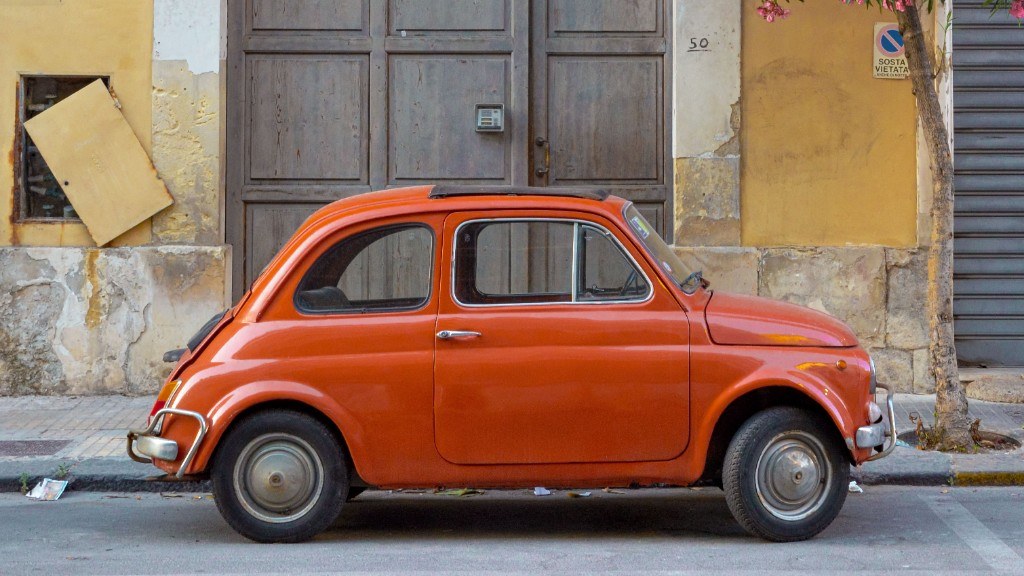
The Nuova 500 put Italy on wheels: just under four million were built between 1957 and 1975, driven by an air-cooled two-cylinder at the rear, at first of 479, later 499.5 and finally 594 cm³. The engineering is as simple as a car can be, and the parts supply is excellent and cheap. The buying decision is not made in the mechanics, though, but in the metal: the small unitary body rusts in the floor panels, the sills and the folding-roof frame. And hardly any series was «restored» cheaply in such numbers as the 500, often freshly tarted up and imported from Italy.
In short: a 500 F or L from 1965–1972 is the best compromise of price, everyday use and classic line. The L adds the richer equipment. Collectors go for the early N and D with rear-hinged doors; price-conscious beginners for the 500 R. Substance matters more than the variant: better an honest R with documented metalwork than a shiny D over a filler-loaded floor. Genuine Abarth 595/695 cars are a world of their own, clearly more expensive, and the market is full of replicas.
Variants and production years
- 500 N (1957–1960): the original, 479 cm³ and at first 13 hp, rear-hinged doors («suicide doors»), at the start as a Trasformabile with a long folding roof back to the tailgate. Rare and sought after.
- 500 D (1960–1965): 499.5 cm³, 17.5 hp, still with rear-hinged doors. The classic early shape, with better everyday usability. Together with the N, the collector league of the series.
- 500 F (1965–1972): the big step of modernisation: front-hinged doors, a stronger body, 18 hp. The most-built variant, and the backbone of the market.
- 500 L (1968–1972): the «Lusso» on the F base: bumper overriders with decorative tubes, carpet, a new dashboard, upgraded seats. Liked because it is more pleasant every day. On the market, slightly above the F.
- 500 R (1972–1975): the run-out model, with the 594 cm³ engine (23 hp) and the floorpan of the Fiat 126 that followed, more sparsely equipped. The cheapest way into the series.
- Giardiniera (1960–1977): the estate, with the engine lying under the load floor and a longer wheelbase. A market of its own, with its own metal and parts situation, roughly at N/D price level.
- Abarth 595/695 (1963–1971): works-tuned offshoots with 27–38 hp. Genuine cars with a documented history cost a multiple of a normal 500. Replicas and «Abarth-Look» conversions dominate the supply.
Body: floor panels, sills, folding-roof frame
The Nuova 500 is small, but its rust points are large, and many of them are structural:
- Floor panels: the main job. Repair panels cost little; the quality of the welding varies dramatically. Lift the carpets, look from above and from below. Fresh, thick underseal is a warning sign, not a buying argument.
- Sills: structural, and rotting from the inside. Under trim strips and rubbers, people like to disguise it. Tap, do not only look.
- Door bottoms and lower edges: blocked door drains let the doors rot from the inside. On N/D cars, also check the rear hinge areas.
- Battery tray and front: the battery sits at the front, under the lid. Acid and spray eat through the metal around the mounting and the front closing panel.
- Wheel arches and wing edges: classic filler zones. A magnet or a paint-thickness gauge belongs at the viewing.
- Folding-roof frame: the front bow and the side edges of the roof frame rust under the cloth. The cloth itself is cheap. The metalwork on the frame is not.
- Import botches: a large part of the supply arrived freshly «restored» from Italy. Without photo documentation of the metalwork, scepticism is required. Shiny paint over rotten metal is, on the 500, the norm, not the exception.
Engineering: two-cylinder, throttle blip, drum brakes
- Two-cylinder (479/499.5/594 cm³): air-cooled, robust, serviceable yourself with the basics. The usual jobs are oil leaks at the crankshaft oil seals, the rocker cover and the sump, and valve clearance that needs regular setting. Clattering valves and blue smoke give away servicing that was put off. A full engine rebuild is comparatively cheap. A tired engine is a bargaining point, not a reason to walk away.
- Check for an engine swap: many cars run on 126 engines fitted later. Not a fault in everyday use, but a price factor on cars offered as «original». Compare the engine number with the series.
- Gearbox: the four-speed gearbox is unsynchronised and needs a throttle blip. Crunching despite a clean blip means worn dogs. The 500 R changes a little more kindly, thanks to the kinship with the 126. If you do not know the technique, have the seller demonstrate it.
- Brakes: drums all round, matched to the power. Pulling to one side and a long pedal travel point to seized wheel cylinders, almost always due after a long lay-up, and luckily cheap.
- Suspension and electrics: a transverse leaf spring at the front, simple swing arms at the rear. Worn bushes are cheap to replace. The 12-volt electrics are straightforward. Still look critically at home-made work on the fuse box and the wiring loom.
- Parts: excellent supply. Practically every part is available new, often at small-car prices. That makes the 500 one of the cheapest classics to run.
Equipment and originality
- Plate and numbers: compare chassis number, type plate and engine number with each other and with the papers. Original, unmolested cars with the matching engine fetch the best prices.
- Abarth, genuine or look? 595/695 badges, wheel-arch flares and an engine lid held open are quickly fitted. A genuine Abarth needs a documented history, the right numbers and, if in doubt, the judgement of a marque specialist. The price gap between replica and original is huge.
- Accessories and conversions: sports steering wheels, twin carburettors and a lowered suspension drag down the value of original cars. Period accessories with paperwork are, by contrast, not a fault.
Specific to Switzerland
The basics of veteran status, MFK and import are in Knowledge. For the Nuova 500:
- Veterans: every Nuova 500 passed the 30-year line long ago. Here in particular, a clean preparation for the inspection pays off.
- MFK: the inspectors know the series and look at the floor panels, the sills and the brakes. A freshly imported car without documentation of the metalwork can fail expensively at the first test.
- Italian imports: the Swiss market is continually supplied with cars freshly «restored» from Italy. Serious sellers show photo documentation and invoices. If both are missing, negotiate the price accordingly, or leave the car.
- Clubs and parts: Fiat 500 clubs and specialists are well represented in Switzerland too. Parts arrive if needed overnight from Italy and Germany. That keeps running costs low.
What to look for at the viewing
The checklist for the Nuova 500 combines the shared inspection catalogue with the model-specific points of this series. For the Nuova 500:
- No buying decision without a lift or a pit. Floor panels and sills are half the car.
- Lift the carpets and take a magnet or a paint-thickness gauge against filler restorations.
- Open and close the folding roof fully, and check the roof frame and the front bow for rust.
- Cold-start the engine, watch for valve clatter and blue smoke, and locate oil leaks at the seals and the sump.
- Have the changes with a throttle blip demonstrated. Crunching despite a clean technique means gearbox wear.
- Compare the numbers and the type plate, question Abarth looks critically, and on Italian imports look at the documentation of the metalwork.
A Nuova 500 that passes these points is one of the most charming and cheapest ways into the classic world: small in size, large in presence, and with a parts supply that leaves almost nothing to wish for.